Crown & Bridge (Ceramic-Focused)
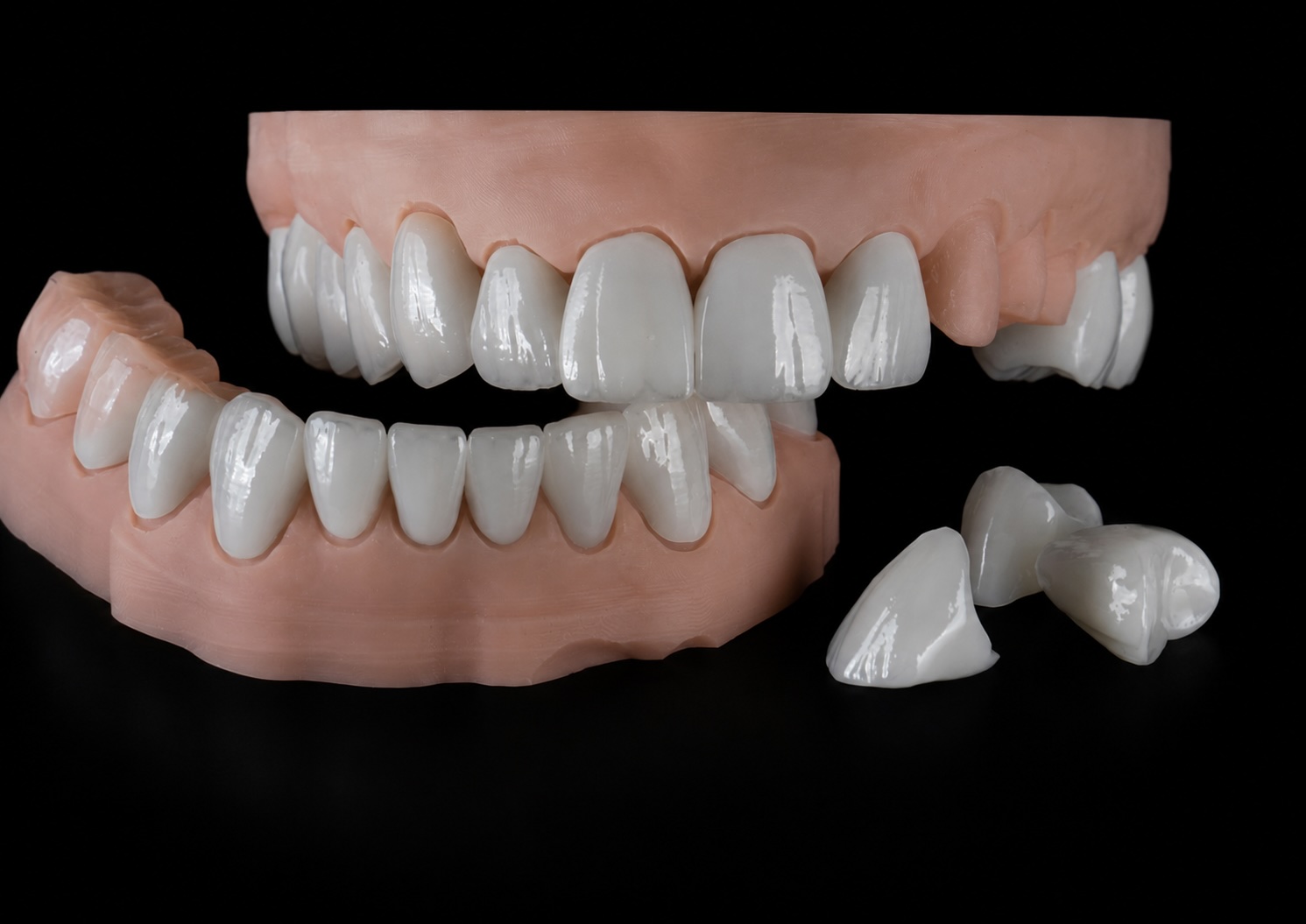
DDI specialises in facially driven CAD/CAM-fabricated ceramic restorations, including single crowns, bridges, and full-arch solutions. High-strength zirconia and lithium disilicate “EMAX” are selected based on functional and aesthetic requirements.
Each restoration is designed with controlled 70-90µ cement space, accurate marginal adaptation, and anatomically correct morphology. Occlusion is developed within a digitally articulated environment to ensure stability in MIP and harmony during excursive movements, resulting in a predictable fit with minimal intraoral adjustment.
.jpg)
Veneers & Aesthetic Restorations “Vonlays”
Veneer cases are designed with a similar philosophy using a facially driven approach incorporating parameters such as incisal edge position, smile curve, and tooth proportion. Functional considerations—including anterior guidance and load distribution—are integrated to ensure both aesthetics and long-term stability.
Critical consideration is veneer preparation that supports the fabrication of ultra-thin restorations (approximately 300 µm). Guidance on optimising this preparation protocol can be provided by DDI.
Material selection and finishing protocols are applied to achieve natural translucency, surface texture and seamless integration with the existing dentition.

Implant Restorations
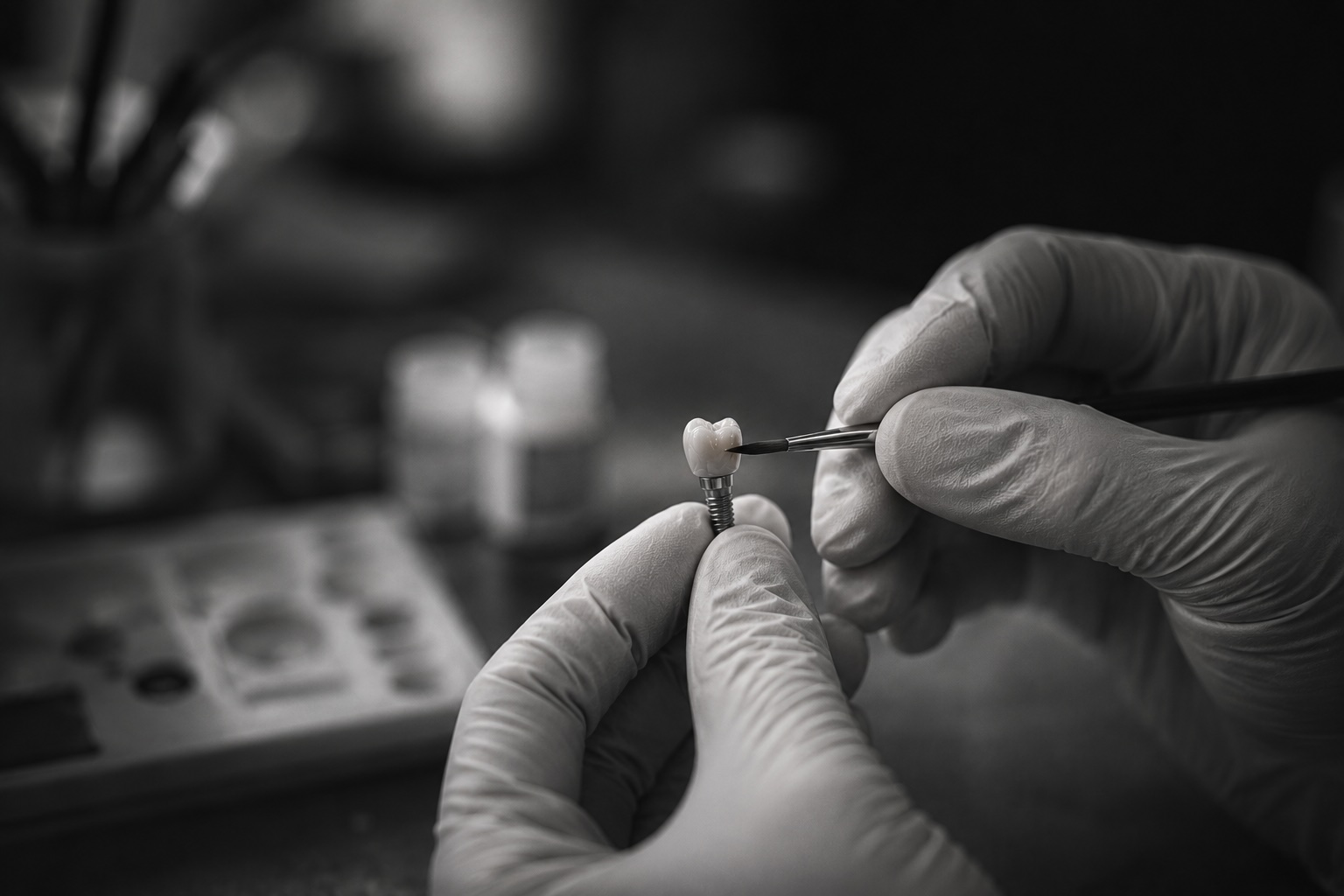
DDI provides a full range of CAD/CAM-fabricated implant-supported solutions, including custom abutments, screw-retained crowns and multi-unit restorations.Each case is digitally designed with attention to implant angulation, emergence profile and prosthetic interface accuracy. This ensures passive fit, optimised load distribution and long-term stability, while supporting healthy peri-implant tissue architecture.
Full Arch Restorations
Full arch rehabilitations are managed through a prosthetically driven digital workflow incorporating all the DSD principles such as: facial flow dynamics, vertical dimension, occlusal scheme development and functional load distribution.
Validated provisional designs can be accurately translated into definitive restorations, maintaining both occlusal stability and aesthetic consistency across treatment phases.
Precision Milling
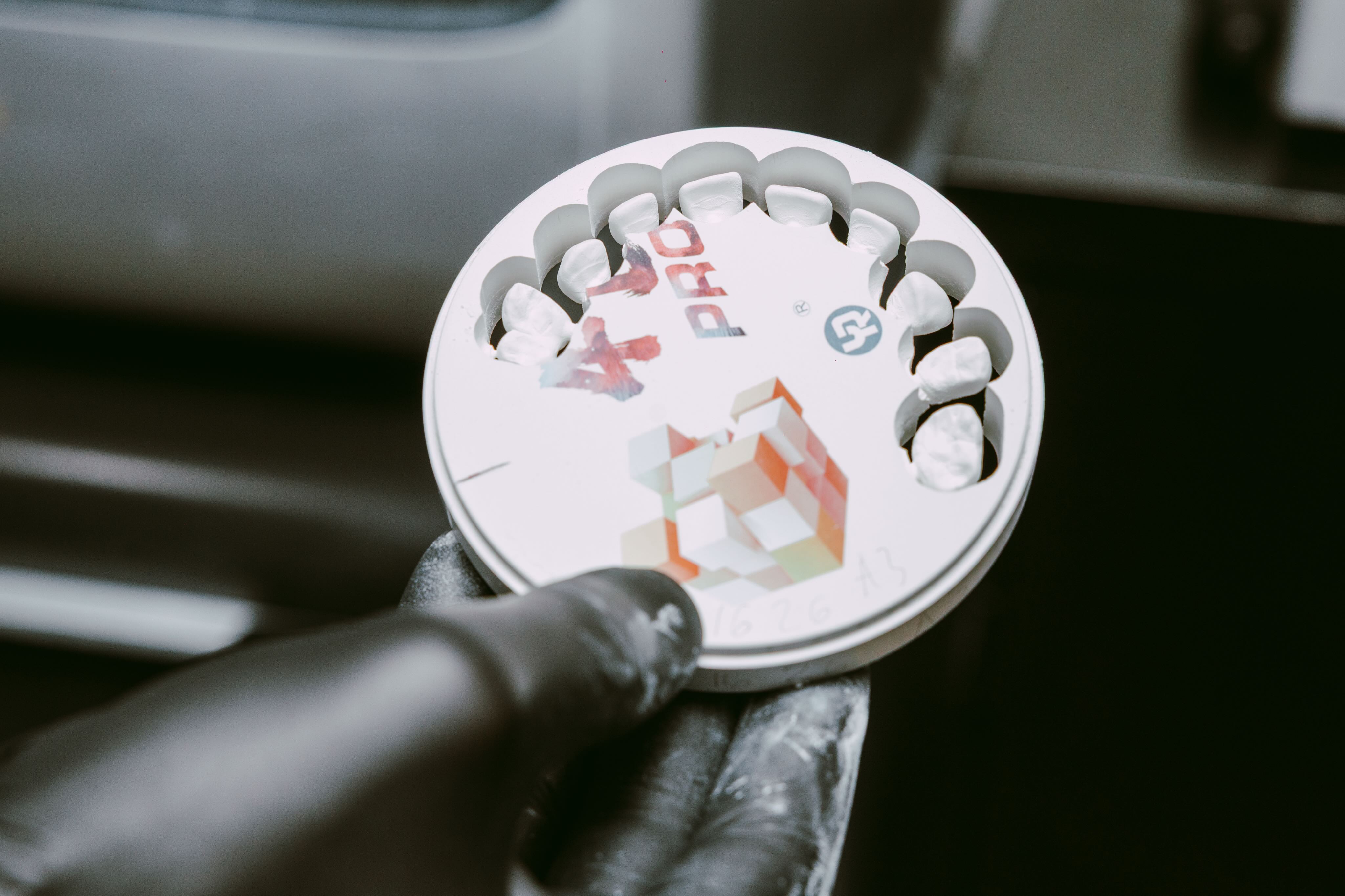
All restorations are manufactured using advanced 5 axis and 4 axis milling systems, with material-specific protocols to maintain accuracy and structural integrity. Dental zirconia (Y-TZP) typically experiences 20% to 30% volumetric shrinkage during the sintering process, while linear shrinkage ranges from roughly 17.7% to 21%.
This significant shrinkage is accounted for during CAD/CAM milling by enlarging the framework, ensuring the final sintered restoration fits perfectly.