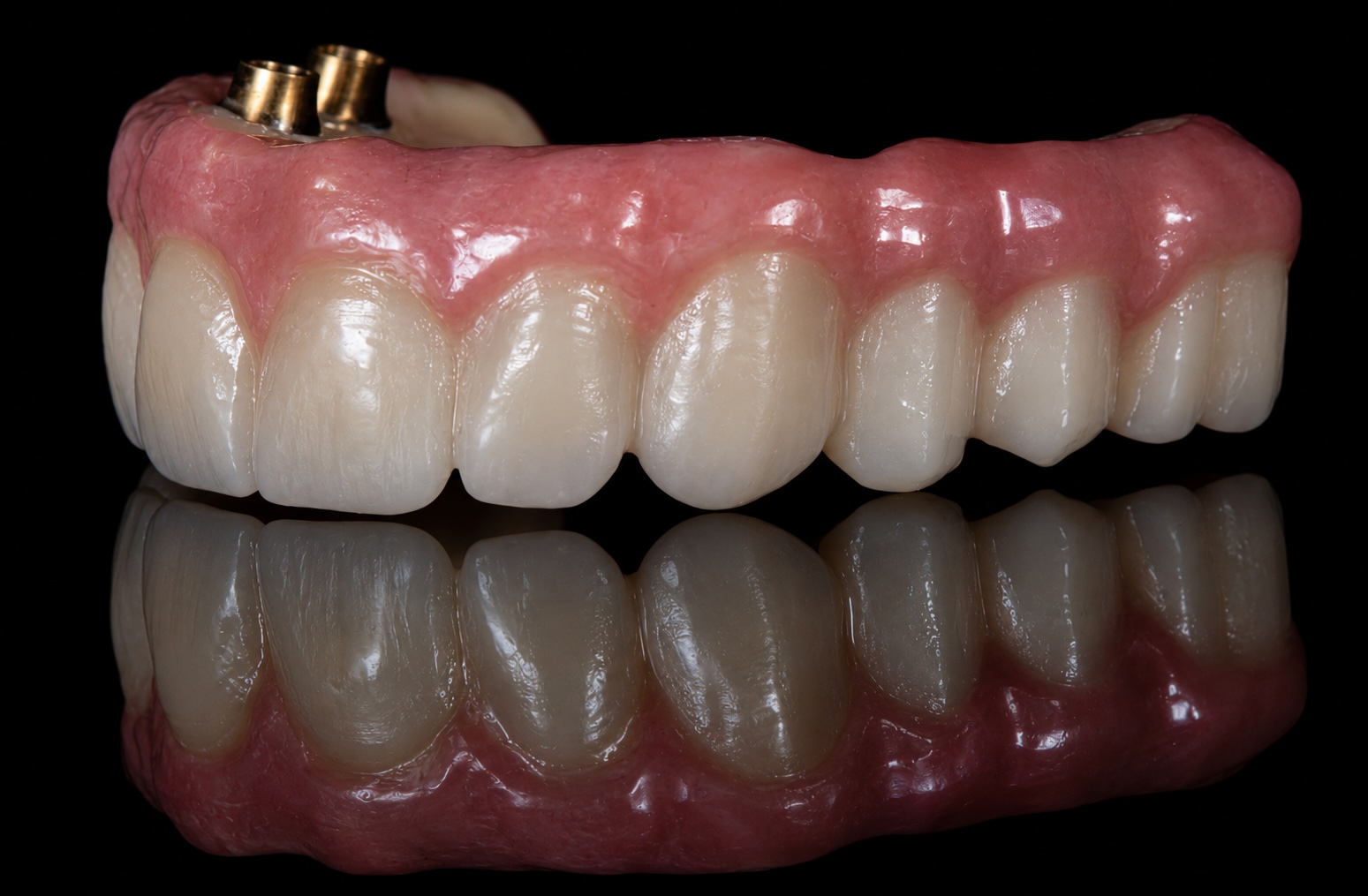
Implant Superstructures & Hybrid Dentures
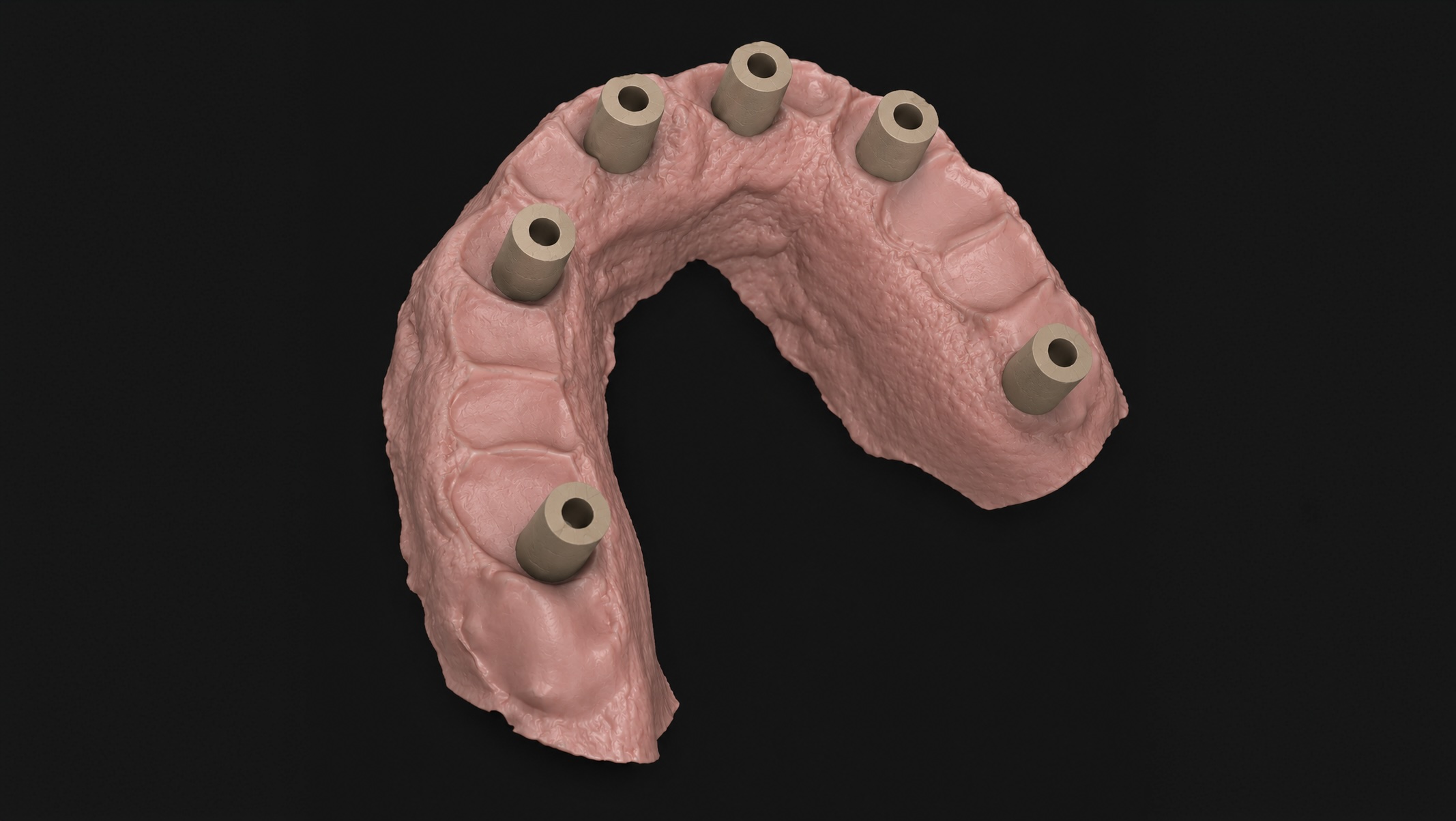
Our implant superstructures are produced through a streamlined digital and analogue workflow that prioritises accuracy and predictability. The process begins with intra-oral or model scans, where implant positions are precisely captured using scan bodies to establish a reliable digital foundation.
CAD Development and Material Selection
From this point, the case is developed in CAD toward the intended outcome—either a monolithic zirconia hybrid or a precision-milled titanium framework supporting individual zirconia crowns with composite gingiva. The design is executed within controlled parameters, including minimum material thickness, implant distribution, and case-specific cantilever considerations.
Aesthetic Integration and Occlusal Design
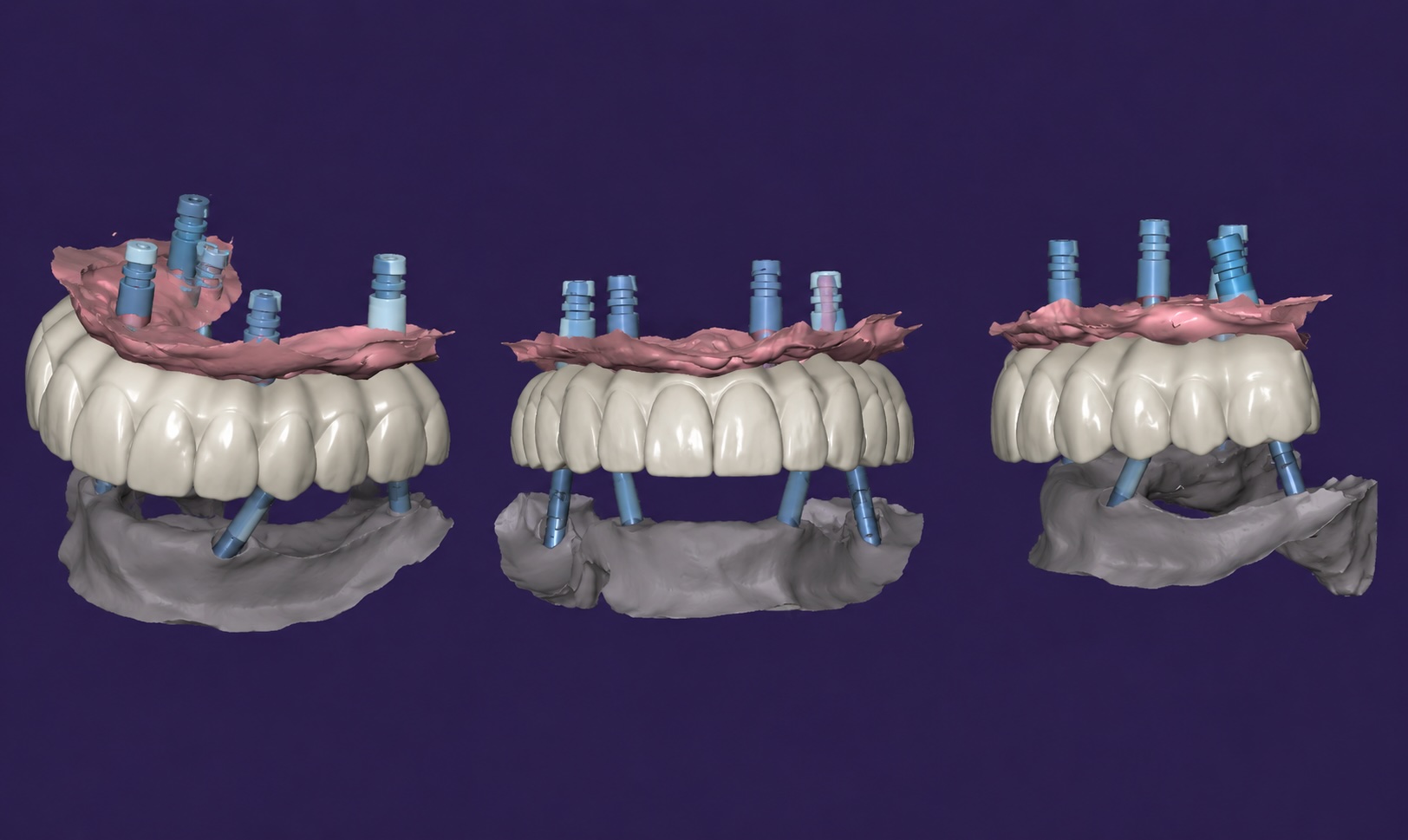
This phase integrates both technical design and smile planning to refine emergence profiles, tooth positioning and overall aesthetics in alignment with the restorative objectives. Occlusion is simultaneously established within the digital environment to ensure balanced contacts and optimal load distribution.
From CAM Production to Quality Control and Delivery
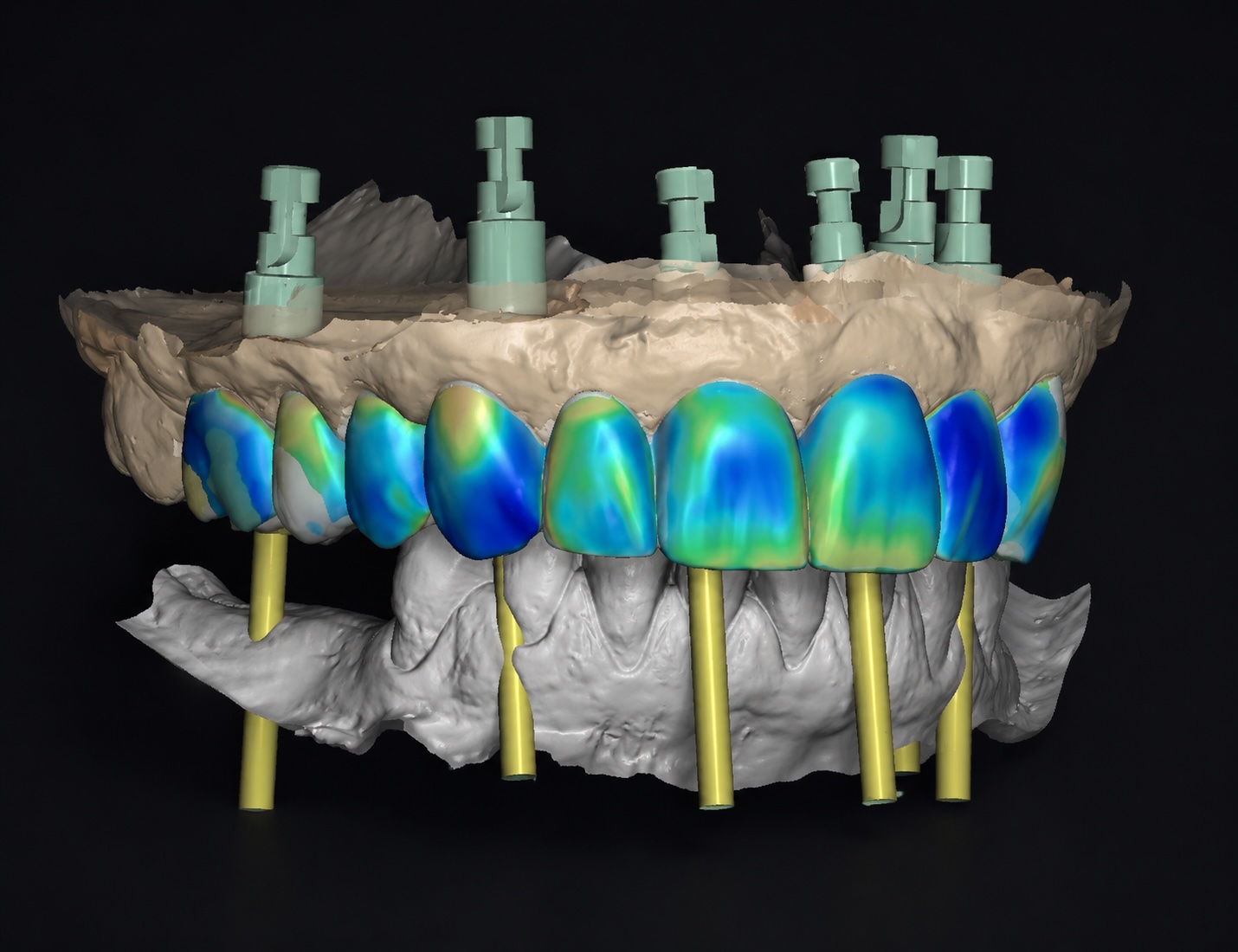
Once approved, the design is transferred to CAM for milling or 3D printing, with material selection guided by the specific bio-mechanical and aesthetic demands of the case. A clinical try-in stage allows for verification of fit, occlusion and aesthetics, ensuring any necessary refinements are made prior to finalisation.
The superstructure is then completed using definitive materials, followed by thorough quality control checks to confirm accuracy, passive fit and structural integrity before delivery.

Communication Strategies for Predictable Outcomes
Clear, structured communication and collaborative planning between the laboratory and clinician are essential to achieving a predictable and successful final outcome.